





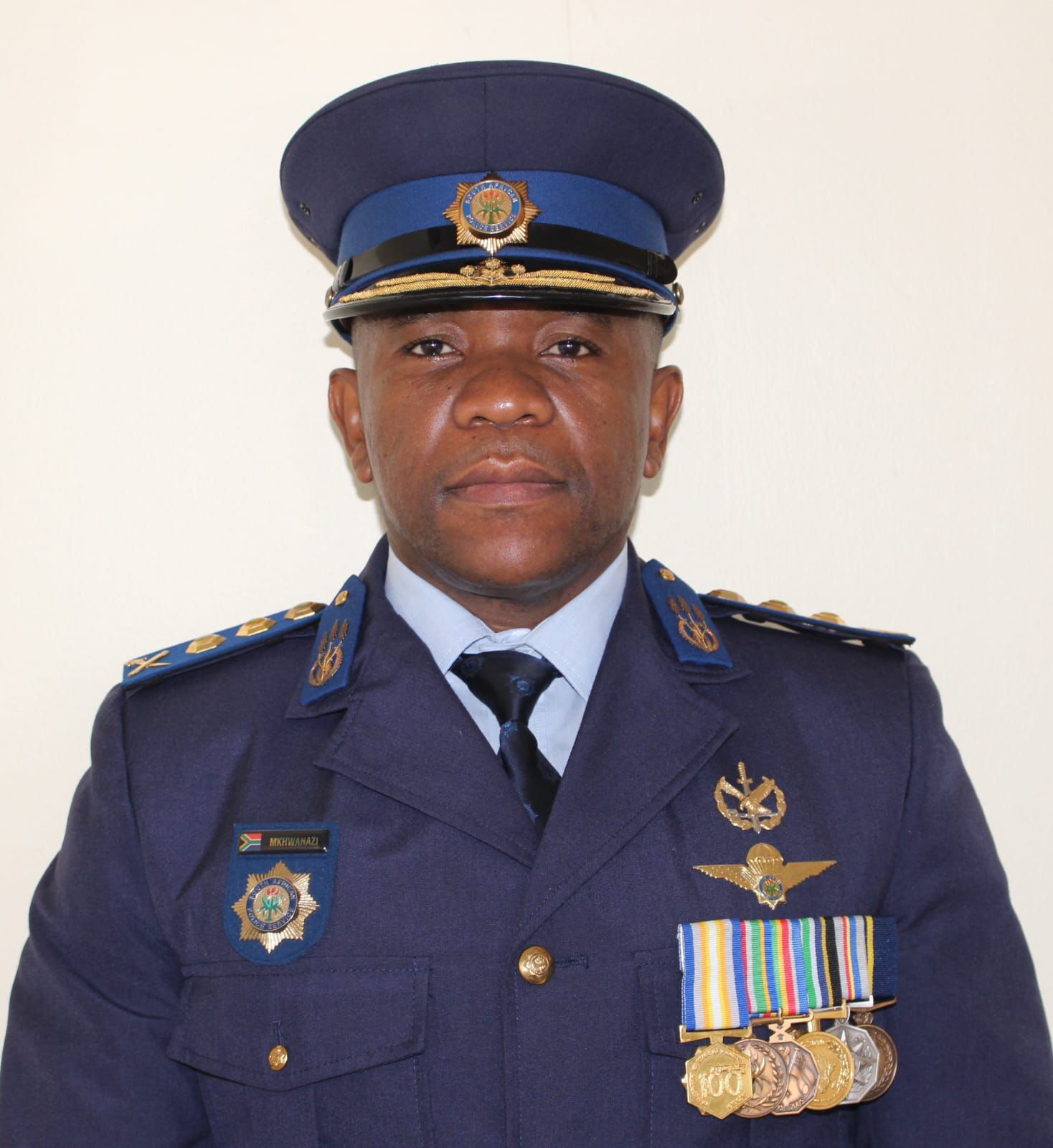

Lieutenant General Nhlanhla Mkhwanazi has become something rare in South African public life: a police commissioner whose name, for many in KwaZulu-Natal, has come to stand for certainty in a province long defined by violence, political killings and organised crime.
On Saturday, the South African Police Service confirmed that Mkhwanazi will remain KwaZulu-Natal’s provincial commissioner for another five years. The announcement, brief and clinical in tone, ends weeks of uncertainty over whether one of the country’s most recognisable police leaders would stay in office beyond the expiry of his contract on 31 March.
The reappointment follows consultation with KwaZulu-Natal premier Thami Ntuli and comes at a moment when confidence in South Africa’s policing institutions remains deeply fragile. SAPS said Mkhwanazi would continue to provide “stability and decisive leadership” in the province, language that reveals as much about KwaZulu-Natal’s insecurity as it does about the commissioner himself.
KwaZulu-Natal is no ordinary province. It has long been one of the most difficult places in South Africa to police. Political assassinations have haunted municipal politics for years. Taxi wars continue to erupt with deadly regularity. Construction extortion syndicates, organised crime groups and localised gang networks have turned parts of the province into battlegrounds where fear, rather than law, often appears to set the rules.
It is within this landscape that Mkhwanazi has built his reputation.
Unlike many senior police figures who have remained distant, bureaucratic or invisible, Mkhwanazi has cultivated the image of a commissioner prepared to confront criminality head on. He has often appeared publicly after major incidents, spoken bluntly about the scale of the challenges facing the province and projected the kind of authority many South Africans increasingly feel has disappeared from public office.
To supporters, he represents one of the few remaining senior officials willing to challenge both organised crime and corruption within the state itself. To others, he has become a symbol of what decisive policing looks like in an era where public trust in institutions has been badly eroded.
That reputation intensified in 2025 when Mkhwanazi publicly suggested that criminal investigations in the province were being frustrated by political interference and elements within law enforcement itself. The allegations sent shockwaves through South African politics and renewed fears that parts of the justice system had become vulnerable to infiltration by criminal interests.
Whether every allegation proves true may ultimately matter less than what the episode revealed: a country increasingly dependent on individual personalities because its institutions no longer inspire confidence on their own.
Mkhwanazi’s reappointment therefore carries significance beyond KwaZulu-Natal. It is, in effect, an admission by SAPS that in one of South Africa’s most volatile provinces, continuity matters more than experimentation.
Premier Thami Ntuli had made little secret of his support for Mkhwanazi remaining in office. He argued that uncertainty around the commissioner’s future risked undermining public confidence and could even affect the province’s ability to attract investment and tourism. For a province still trying to recover from years of instability, the message was clear: KwaZulu-Natal could not afford another vacuum at the top of its police service.
Yet the reappointment also raises uncomfortable questions.
South Africa has developed a habit of placing its faith in strong individuals rather than strong systems. Again and again, the country has found itself relying on one judge, one prosecutor, one commissioner or one politician to hold back institutional decline. Mkhwanazi may well be the right man for the moment, but no province should have to depend so heavily on a single figure to feel safe.
The real challenge of his second term will not be preserving his image. It will be producing results.
Over the next five years, KwaZulu-Natal’s residents will expect more than reassuring statements and high profile appearances. They will expect fewer political killings. They will expect fewer extortion rackets and fewer murders. They will expect the police service to act more quickly, more visibly and more effectively against the criminal networks that have become embedded in parts of the province.
Most of all, they will expect proof that decisive leadership can become something more enduring than a personality trait.
For now, Lieutenant General Nhlanhla Mkhwanazi remains in place. In KwaZulu-Natal, that will be welcomed by many not simply as an administrative decision, but as an attempt to hold the line in a province that has too often felt on the edge.