







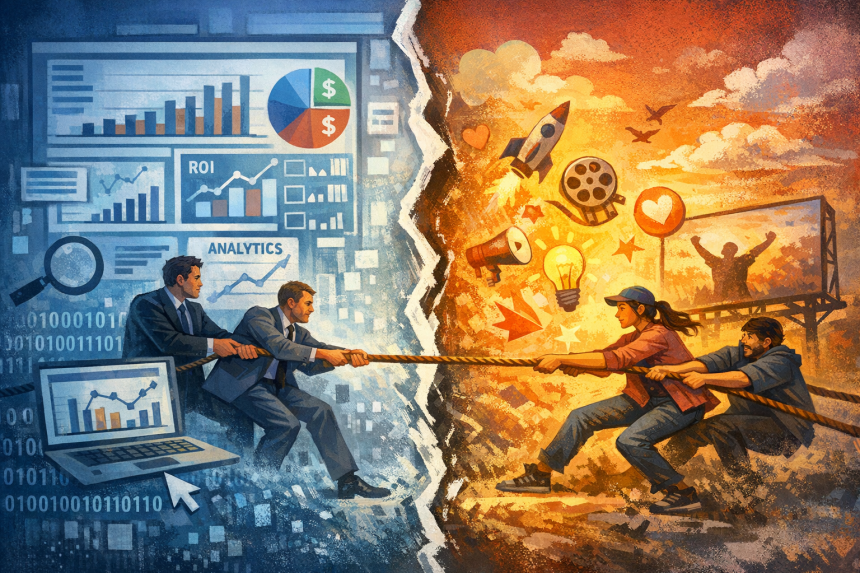
For decades, marketing has been the art of persuasion — a blend of storytelling, psychology, and creativity designed to capture attention and build lasting relationships between brands and consumers. But in today’s data-driven environment, many industry professionals are beginning to ask a difficult question: has the marketing industry sacrificed creativity in its pursuit of performance metrics?
The debate is gaining traction globally and locally. As companies increasingly prioritise measurable outcomes such as clicks, impressions, and conversion rates, some marketers argue that the industry is slowly losing the very thing that once made it powerful — its creative magic.
At first glance, the shift toward data appears logical. Digital platforms have revolutionised marketing by giving brands access to detailed consumer insights. Every advertisement, search query, and purchase can now be tracked, analysed, and optimised in real time. Marketing executives are no longer asked to justify creative ideas alone; they are expected to present dashboards, analytics reports, and immediate returns on investment.
But while this data revolution has made marketing more measurable, it may also be making it less memorable.
Research from global measurement firm Nielsen suggests that creative quality accounts for nearly half of a campaign’s effectiveness. In other words, while targeting, media placement, and budgets matter, the creative idea itself remains the single most important driver of advertising performance.
Yet in many corporate environments, creativity is increasingly constrained by short-term performance demands.
Campaigns are often judged within days or weeks of launch, based primarily on digital metrics such as click-through rates or cost-per-acquisition. This pressure to deliver immediate results can discourage experimentation, leading marketers to rely on safer, more formulaic campaigns rather than bold ideas that could resonate culturally and emotionally with audiences.
The result is an industry caught in a paradox: the tools designed to improve marketing effectiveness may be slowly diluting the very creativity that makes advertising impactful.
Evidence of this tension can be seen in the growing divide between performance marketing and brand marketing. According to studies from the Institute of Practitioners in Advertising, long-term brand-building activities are responsible for the majority of sustainable business growth, while short-term performance marketing typically captures existing demand rather than creating new demand.
Put simply, performance marketing converts customers. Brand marketing creates them.
This distinction is critical.
The most iconic marketing campaigns in history were never built solely around data optimisation. They were built around ideas that captured imagination and emotion.
Consider brands such as Nike and Apple, whose advertising strategies have long prioritised storytelling and cultural resonance. Their campaigns often transcend product promotion, becoming part of broader cultural conversations that shape brand identity for years.
South Africa offers its own examples of this creative approach. Brands like Chicken Licken have built strong consumer loyalty through humour, storytelling, and culturally relevant advertising that reflects the everyday experiences of local audiences. These campaigns succeed not because they optimise clicks but because they connect emotionally with viewers.
And emotional connection remains one of the most powerful drivers of consumer behaviour.
Studies across the advertising industry consistently show that emotionally engaging campaigns generate stronger brand recall, greater shareability, and higher long-term purchase intent compared to purely rational messaging. When consumers feel something — whether laughter, nostalgia, or inspiration — they are far more likely to remember the brand behind the message.
This is where marketing risks losing its soul.
When the focus shifts entirely toward immediate metrics, marketing becomes transactional rather than relational. Brands begin to chase conversions instead of building trust, and advertisements begin to resemble algorithm-driven content rather than creative storytelling.
That does not mean data is the enemy of marketing. On the contrary, data remains an invaluable tool for understanding audiences and improving strategic decision-making. But data should inform creativity, not replace it.
The most effective marketing strategies of the future will likely combine both worlds — leveraging data to understand consumer behaviour while giving creative teams the freedom to craft campaigns that resonate emotionally and culturally.
In other words, the challenge facing the marketing industry today is not choosing between creativity and analytics, but restoring balance between them.
While metrics may tell us how many people clicked on an advertisement, they cannot measure the moment when a campaign becomes unforgettable.
And in the long run, it is those unforgettable moments that build brands.